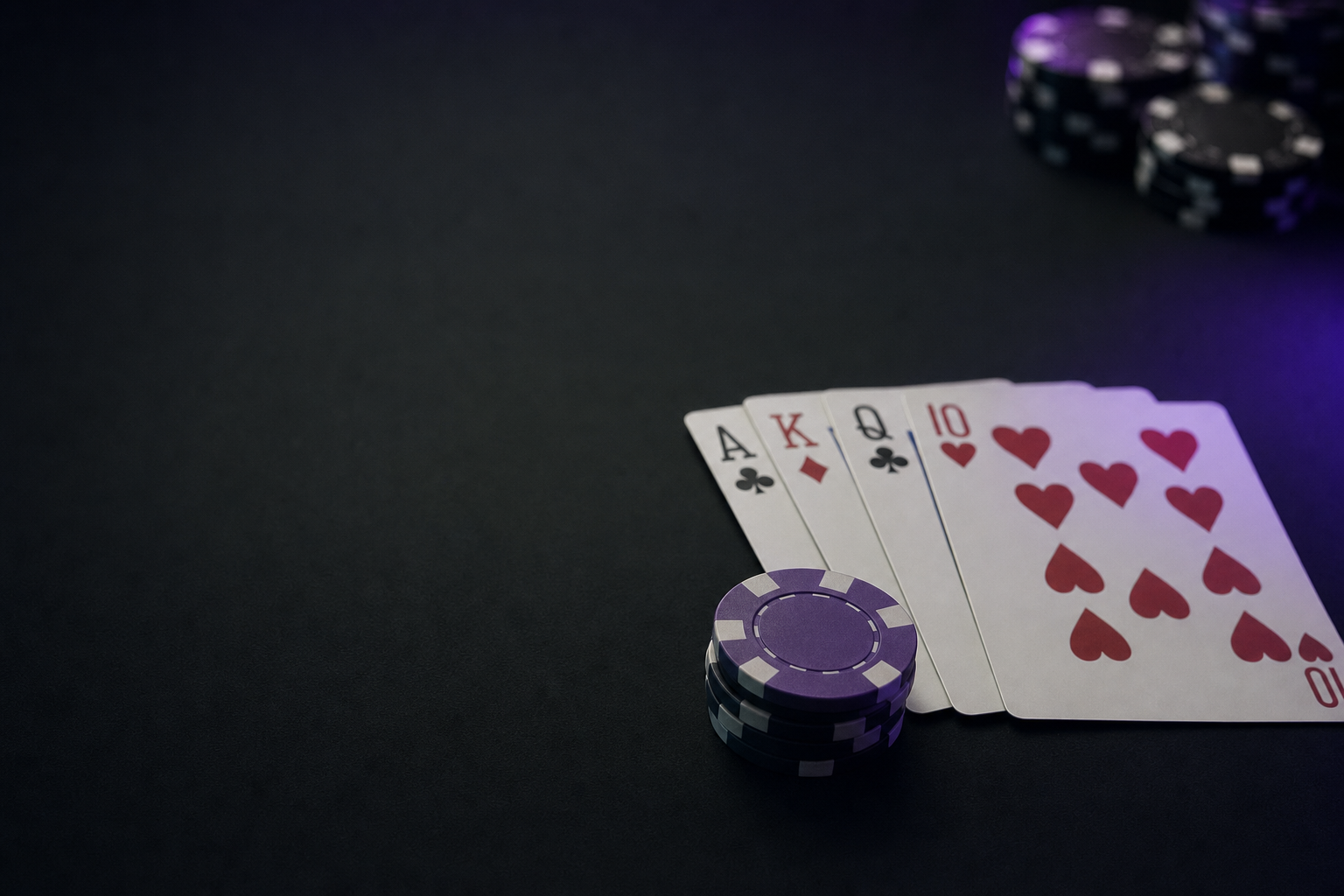
The PLO Hands That Lose Value Fastest at 30bb
At 30bb, small pocket pairs attached to your hand stop being assets. They're liabilities. The hands that print at 100bb — JJ22, QQ22, baby double-paired stuff — fold from every position at 30bb.
The pattern is simple: low-pair dangler + anything = fold short-stack. That's the rule. Below are the 10 biggest EV droppers in our solves, and the math behind why they die shallow.
All numbers here come from our 6-max 100bb and 30bb solves, no straddle.
Why Does Stack Depth Change Opening Ranges in PLO?
Stack depth changes which hands make money because shallow stacks kill implied odds. At 100bb, you have 2–3 streets of leverage after the flop. At 30bb, you're basically one pot-sized bet from all-in once money goes in.
That matters because a lot of PLO hands make their money by flopping a set, a wrap, or a disguised nut hand and getting paid off on two more streets. Shrink the stack, shrink the payoff.
Small pairs are the clearest example. You flop a set of 2s about 1 in 8 times. At 100bb, that set can win you 80+ big blinds. At 30bb, it wins you 30bb max — and you paid 1bb every time you missed. The math stops working.
SPR (stack-to-pot ratio) is the other half. Low SPR flops reward made hands and nut blockers. They punish drawing hands and marginal equity. Small-pair danglers are the definition of marginal equity.
The 10 Hands That Lose the Most Value Short-Stack
Ranked by EV drop from 100bb to 30bb open. Every number is the solver's EV for opening that hand from the listed position.
1. 3♠3♥2♠2♦ (from BTN)
The biggest fall-off in the dataset. Opens for +0.87bb at 100bb. Opens for -0.32bb at 30bb. That's a -1.19bb swing.
Looks cute. It's trash. Two baby pairs need to hit sets to win, and short-stacked you can't get paid enough when they do. Fold it from the button. Fold it from everywhere.
2. T♠T♥2♠2♦ (from BTN)
+0.92bb at 100bb. -0.10bb at 30bb. Drop: -1.02bb.
This one stings because TT feels like a real pair. But the 22 is dead weight, and at 30bb you don't have enough room to realize the equity on either pair. Solver folds.
3. 4♠4♥3♦3♣ (from BTN)
Double-suited. Grade B at 100bb. Opens for +0.62bb. At 30bb: -0.40bb. Drop: -1.02bb.
Double-suited saves a lot of hands. Not this one. The suits don't matter when the underlying hand needs to flop a set to have any value.
4. 9♠9♥2♠2♦ (from BTN)
+0.75bb at 100bb. -0.21bb at 30bb. Drop: -0.96bb.
The dangler pattern extends below JJ. 99, 88, 77 — doesn't matter. If the side pair is baby, the hand folds short-stack even from the button.
5. Q♠Q♥2♠2♦ (from HJ)
+0.84bb at 100bb. -0.10bb at 30bb. Drop: -0.94bb.
Yeah. QQxx is not automatic. The 22 dangler undoes the premium. You're opening what feels like a monster and losing money on it from the hijack.
6. J♠J♥2♦2♣ (from BTN, double-suited)
+0.77bb at 100bb. -0.16bb at 30bb. Drop: -0.93bb.
"But it's double-suited." Doesn't save it. At 30bb, the flush equity doesn't get paid — you can't build pots deep enough for suited hands to shine. Fold.
7. J♠J♥2♠2♦ (from CO)
+0.78bb at 100bb. -0.14bb at 30bb. Drop: -0.92bb.
Same hand class, single-suited, from the cutoff. Same answer. Position doesn't save JJ22. Nothing saves JJ22 at 30bb.
8. 5♠5♥2♠2♦ (from CO)
+0.54bb at 100bb. -0.33bb at 30bb. Drop: -0.87bb.
The textbook version of the pattern. Pair plus baby dangler = autofold at 30bb. If you're opening this, stop opening this.
9. 4♠4♥3♠3♦ (from HJ)
+0.56bb at 100bb. -0.26bb at 30bb. Drop: -0.82bb.
Still baby double-paired. Still F-grade. Still a fold from the hijack even though 4433 feels slightly more connected than 4422.
10. J♠J♥3♠3♦ (from CO)
+0.71bb at 100bb. -0.10bb at 30bb. Drop: -0.81bb.
Even bumping the dangler from 22 to 33 doesn't save JJ. The set-mining math just doesn't work when the stack is this shallow.
What's the Pattern?
Low-pair dangler + anything = fold at 30bb.
That's it. That's the rule. Doesn't matter how pretty the rest of the hand looks. Doesn't matter if it's double-suited. Doesn't matter if the top pair is QQ.
If your hand has a pair of 2s, 3s, 4s, or 5s hanging off the side, the hand needs deep money to justify playing it. Shallow, you can't build the pot big enough to get paid on the sets you flop, and you pay 1bb every time you miss.
Recognize the shape at the table. That's the whole article.
How Short Is "Short-Stack" in PLO?
30bb and below is short. That's where these hands become clear folds.
50bb is the in-between zone. Some of these hands are still marginal opens at 50bb from late position — JJ22 double-suited on the button, for example, is close. Not a printer, but not the disaster it is at 30bb.
100bb and above is deep. Every hand above opens fine at 100bb. That's where implied odds come back, set-mining pays full price, and double-suits start mattering again.
Tournament players live in 15–40bb for most of their day. Cash players who sit short-stacked intentionally live at 30–40bb. If that's you, this article is your range audit.
What Should You Open at 30bb Instead?
Open hands that flop well with low SPR. That means:
- Premium AAxx — AA with any two reasonable side cards still opens from every seat.
- KKxx with real side cards — KK98ss, KKT9ds, yes. KK22, fold.
- High connected rundowns — JT98, T987, QJT9 with at least one suit.
- Broadway-heavy hands — KQJT, AKQJ, AQJT with a suit.
- Double-suited premium rundowns — these still crush at any stack depth.
The through-line: hands that flop top pair plus a draw, or nut-flush outs, or straight equity without needing to hit a set. Short-stack PLO rewards hands that hit the flop hard, not hands that wait for a lucky set.
FAQ
Are all double-paired hands bad at 30bb in PLO?
No. AAKK, KKQQ, AAQQ still open from every position at 30bb — the pairs are big enough that top pair + set equity carries the hand. The problem is specifically double-paired hands where at least one pair is 22–55. Those rely on set-mining to work, and set-mining dies at shallow stack depths.
Does position change this?
A little, but not enough to save the hands listed above. BTN opens wider than UTG at every stack depth. The hands in this article are folds even from the button at 30bb. If the solver folds a hand from BTN, it folds from every earlier position.
What about JJ with suited connectors, like JJ54 single-suited?
Different hand class. JJ54ss plays more like a suited rundown with overpair protection than a set-mining hand. It still opens at 30bb from late position because the connector gives you real straight equity, not just a set-or-nothing profile. Baby dangler = bad. Suited connector = fine.
Should I limp these hands at 30bb instead of raising?
No. If the solver folds them as opens, limping doesn't fix the problem. Limping just gets you to the flop with a hand that still doesn't flop well at low SPR. You're paying 1bb to be in a spot where you have no equity edge. Fold and move on.
Does the same pattern apply in straddled games?
Probably, but we don't have public solver data on straddled games yet. Straddled pots change effective stack depth — a 100bb stack in a 2x straddle game plays more like 50bb. That shifts where these cutoffs sit. We're working on extracting the straddle data. Watch this space.
Do these numbers change in 9-max or short-handed?
The specific EV figures shift, but the pattern holds. In 9-max, UTG opens even tighter, so these hands are even clearer folds from early position. In short-handed (4-max, 3-max) games, BTN and SB open wider overall, but the baby-dangler pattern doesn't change — small pairs still need deep money to work.
How does PLO bankroll requirement change at 30bb?
Short-stacked PLO lowers variance per session but doesn't change the standard bankroll recommendation much. A safe PLO bankroll is still 300 buy-ins of whatever stack size you play. If you buy in for 30bb consistently, your per-buy-in number is smaller, but the count is the same.
Where can I check any hand myself?
Head to theplolab.com and plug the hand into the equity calculator. Compare opening EV at different stack depths, check how it plays against typical ranges, and find the break-even point for any starting hand. Built for live players — pull it up at the table.
---
Last updated: April 17, 2026. All EV figures from our 6-max solves, no straddle.